About 180 minutes
The Hittites — Story, Setting & Ideas
Egypt Near East
41,294 recorded words. 14 minutes difference from this book's estimate.
View Gutenberg source #40243
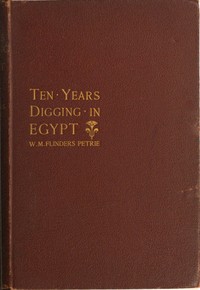
The catalog record for Ten years' digging in Egypt, 1881-1891 — Text and Context provides practical reading context through 44,513 words, 3 hr 14 min estimated reading time, and 9 detected text sections.
The text analysis averages about 22.1 words per sentence, while the detected sections provide another way to judge how the source is divided.
Project Gutenberg metadata also associates the work with “Egypt -- Antiquities,” connecting these edition facts with the source record’s subject description.
Explore this collection
These alternatives are selected using recorded categories and estimated reading time.
About 180 minutes
Egypt Near East
41,294 recorded words. 14 minutes difference from this book's estimate.
View Gutenberg source #40243About 160 minutes
Egypt Near East
36,611 recorded words. 34 minutes difference from this book's estimate.
View Gutenberg source #59789About 256 minutes
Egypt Near East
58,657 recorded words. 62 minutes difference from this book's estimate.
View Gutenberg source #27802Search stored excerpts and compare books → Choose by your preferences →
Choices use stored catalog measurements. Estimates vary with reading speed. A shared category is a catalog label, not a claim that two books have the same argument or literary quality.
Search reads excerpt text stored with this catalog and links to its associated Gutenberg record. The connection is stored in the site database; this tool does not recheck that every excerpt is word-for-word identical to that external record. Excerpt search does not cover every chapter and does not verify historical publication dates.
Catalog snapshot checked: 2026-09-26. Coverage: 97 public books, 97 available source excerpts.
Calculated from edition completeness, EPUB availability, text structure and catalogue metadata. Not a user rating.
Total of 100 points, scaled to a 2.5-5.0 range. Editions with an empty description or a missing EPUB file are not scored.
Public-domain source text
The source text is kept in the dedicated reader, separate from this catalogue record and its commentary.
Petrie opens his account not with a grand statement on Egyptian civilization but with a frank description of his intended audience: readers who want the substance of archaeological results without the precision of scientific memoirs. He promises that hardly a single measurement will be found in the volume, directing those who seek detail to his annual reports. This framing immediately distinguishes the book from his technical publications and signals a narrative focused on the human and material dimensions of excavation.
Petrie’s narrative is grounded in the physical realities of digging. He describes stripping for work inside a rock-cut tomb, spending hours opening coffins and sifting through black sooty dust, emerging “much like a coal-heaver or a sweep” and needing to wash in a nearby pond. Such passages convey the labor and discomfort behind archaeological discovery. He also notes the careful recording of finds, cataloguing each object and noting its position exactly as left by the ancient interrers. This attention to method is a recurring theme, though Petrie avoids technical jargon in favor of vivid, firsthand description.
The material culture Petrie uncovers often points to foreign connections. At Illahun, he finds pottery that is not Egyptian in paste or form but predominantly Phoenician, alongside an Aegean vase decorated with an ivy leaf and stalk. He identifies this as the earliest style of natural decoration after the geometric period. Such objects challenge a purely insular view of Egyptian history and hint at trade or influence. Petrie also notes a wooden stamp of the Hyksos king Apepi, calling it the only small article yet known of that dynasty, and a scarab of Amenhotep III recording the slaying of 102 lions. These details ground broader historical narratives in specific, tangible finds.
Petrie confronts a curious chronological problem in the family tomb at Illahun. Although the pottery and coffin decoration date the burial to the end of the nineteenth dynasty, all the scarabs found on the bodies belong to the early eighteenth dynasty, with a few from the twelfth. He finds it strange that the decorations should be heirlooms. This observation, presented without resolution, illustrates the complexity of interpreting archaeological assemblages. Similarly, he notes that later rock tombs from the twenty-second to twenty-fifth dynasties often contain rude coffins with sham inscriptions copied by a decorator who could not read, revealing a decline in funerary literacy and craftsmanship.
Readers interested in the broader context of Petrie’s work may wish to consult his more technical annual volumes, which contain the measurements and rigid statements he deliberately omits here. The present book offers a complementary perspective: the excavator’s own view of what he found most striking, puzzling, or physically demanding. It is best approached as a personal narrative of discovery rather than a systematic survey, and its value lies in the specificity of its observations rather than in any overarching thesis.
Reading Petrie’s decade in the dust, I keep thinking how the pyramids must have felt like fixed points amidst all that shifting sand. His careful hands-on digging makes me wonder about the quieter truth behind those grand stones. It’s a different kind of patience, the sort found in The Storehouses of the King; Or, the Pyramids of Egypt What They Are and Who Built Them — Key Ideas to Explore, where the awe is still there, but the voice feels familiar, almost like a letter from an old friend.
Build a private reading journal entry for this title.