About 452 minutes
The glory of the Pharaohs — Reading Companion
Egypt Near East
103,957 recorded words. 125 minutes difference from this book's estimate.
View Gutenberg source #72865
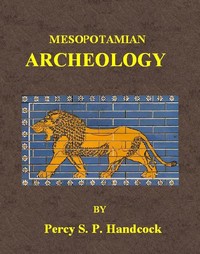
The catalog record for Mesopotamian Archaeology An introduction to the archaeology of Mesopotamia and Assyria — A Reader’s Guide provides practical reading context through 132,574 words, 9 hr 37 min estimated reading time, and 18 detected text sections.
The text analysis averages about 29.8 words per sentence, while the detected sections provide another way to judge how the source is divided.
Project Gutenberg metadata also associates the work with “Iraq -- Antiquities,” connecting these edition facts with the source record’s subject description.
Explore this collection
These alternatives are selected using recorded categories and estimated reading time.
About 452 minutes
Egypt Near East
103,957 recorded words. 125 minutes difference from this book's estimate.
View Gutenberg source #72865About 362 minutes
Egypt Near East
83,068 recorded words. 215 minutes difference from this book's estimate.
View Gutenberg source #47291About 344 minutes
Egypt Near East
79,100 recorded words. 233 minutes difference from this book's estimate.
View Gutenberg source #25080Search stored excerpts and compare books → Choose by your preferences →
Choices use stored catalog measurements. Estimates vary with reading speed. A shared category is a catalog label, not a claim that two books have the same argument or literary quality.
Search reads excerpt text stored with this catalog and links to its associated Gutenberg record. The connection is stored in the site database; this tool does not recheck that every excerpt is word-for-word identical to that external record. Excerpt search does not cover every chapter and does not verify historical publication dates.
Catalog snapshot checked: 2026-09-26. Coverage: 97 public books, 97 available source excerpts.
Calculated from edition completeness, EPUB availability, text structure and catalogue metadata. Not a user rating.
Total of 100 points, scaled to a 2.5-5.0 range. Editions with an empty description or a missing EPUB file are not scored.
Public-domain source text
The source text is kept in the dedicated reader, separate from this catalogue record and its commentary.
Handcock opens his 1912 survey by acknowledging that archaeological knowledge is provisional: 'the works of the greatest scholars and experts have no finality, they are but stepping-stones towards the goal of perfect knowledge.' He positions his book as an update to the pioneering publications of Layard, Rawlinson, Botta and Place, incorporating material made accessible since their time. The preface credits Dr. Wallis Budge for the original suggestion, and Handcock states his aim to give 'a brief account of the civilization of ancient Babylonia and Assyria in the light of this new material.' He notes that space allotted to each art or craft varies according to the relative importance of the subject and the amount of available material.
The preface establishes a self-aware, provisional tone. Handcock describes earlier works as 'stepping-stones' and acknowledges that his own volume will likewise lack finality. This framing prepares the reader for a synthesis that is explicitly selective: chapters on architecture, sculpture and metallurgy are made 'as comprehensive as the limitations of the volume permit,' while other subjects receive less space. The author also signals his intended audience by including a short bibliography for those who wish to 'work up the sketch into a picture.' The reader should note that Handcock does not claim to have examined every object firsthand; he relies on published excavation reports and the collections of European museums.
In the later excerpt, Handcock demonstrates his method of interpreting Assyrian palace reliefs. Describing a bas-relief of Tiglath-Pileser III conducting a siege, he draws a direct parallel to the biblical account in 2 Kings and Isaiah: 'All the means of attack here mentioned are represented in our bas-relief.' He itemizes the bows, wicker shields, and the 'bank' (an artificial mound for a battering-ram). He also notes the depiction of captives impaled on stakes, calling it 'highly realistic.' The inscription on the relief, he remarks, 'refers to the various articles of tribute' but 'is not possessed of any especial interest.' This shows Handcock weighing visual evidence against textual, and prioritizing the relief's narrative content over its accompanying label.
Handcock devotes careful attention to the materiality of Assyrian sculpture. He describes the 'gigantic winged human-headed bulls and lions' from Sargon's palace at Khorsabad as 'neither bas-reliefs, nor are they perfect round sculptures, but a mixture of the two.' This technical observation about sculptural technique is paired with a description of the palace's architecture: a fortress built on a height, with three rows of superimposed towers 'not unlike that of a ziggurat with its receding stages.' He notes arched doorways as 'one of the many incidental proofs of the frequency with which the arch was used in Assyrian architecture.' The reader gains a sense of how Handcock moves between specific artifacts and broader cultural conclusions.
Two chapters are devoted to cuneiform writing, covering 'its pictorial origin, the history of its decipherment, and the literature of which it is the vehicle.' Handcock also includes a historical review of excavations. The preface indicates that these chapters are meant to complement the art-historical ones, providing the textual counterpart to the visual record. The reader should expect a treatment that emphasizes the evolution of script from picture to abstract sign, and that situates decipherment as a scholarly achievement of the nineteenth century. Handcock does not provide translations of long texts in the excerpts, but he uses cuneiform inscriptions as sources for historical narrative, as when he cites the 'clay cylinders and tablets' of Tiglath-Pileser III.
Handcock's book is best read as a museum companion and a digest of early twentieth-century scholarship. The reader will benefit from having a map of Mesopotamia at hand, as the text assumes familiarity with site names such as Khorsabad, Nineveh, and Babylon. The author's habit of cross-referencing biblical passages may help orient those with a background in Near Eastern history, but the core value lies in his systematic description of artifacts and his clear-eyed assessment of what the archaeological record can and cannot tell us.
This guide’s careful mapping of brick walls and cuneiform lines brought back sitting with my grandfather’s old atlas, tracing the Euphrates with a finger. Babylonians and Assyrians — Themes and Context once gave me that same hush—not of grand discovery, but of ordinary lives layered beneath the dust, patiently waiting to be acknowledged.
Answer a few questions and save a private reflection on this device.