About 24 minutes
Casa Grande Ruins Trail — Context and Discussion
Ancient Civilizations
5,369 recorded words. 3 minutes difference from this book's estimate.
View Gutenberg source #60118
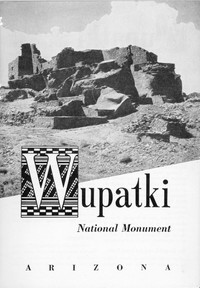
Before opening Wupatki National Monument, Arizona — A Reader’s Guide, the edition data offers a quick orientation: 4,737 words, 21 min estimated reading time, and 1 detected text section.
The text analysis averages about 22.1 words per sentence, while the detected sections provide another way to judge how the source is divided.
Project Gutenberg metadata also associates the work with “Wupatki National Monument (Ariz.),” connecting these edition facts with the source record’s subject description.
Explore this collection
These alternatives are selected using recorded categories and estimated reading time.
About 24 minutes
Ancient Civilizations
5,369 recorded words. 3 minutes difference from this book's estimate.
View Gutenberg source #60118About 27 minutes
Ancient Civilizations
6,109 recorded words. 6 minutes difference from this book's estimate.
View Gutenberg source #38352About 30 minutes
Ancient Civilizations
6,732 recorded words. 9 minutes difference from this book's estimate.
View Gutenberg source #62374Search stored excerpts and compare books → Choose by your preferences →
Choices use stored catalog measurements. Estimates vary with reading speed. A shared category is a catalog label, not a claim that two books have the same argument or literary quality.
Search reads excerpt text stored with this catalog and links to its associated Gutenberg record. The connection is stored in the site database; this tool does not recheck that every excerpt is word-for-word identical to that external record. Excerpt search does not cover every chapter and does not verify historical publication dates.
Catalog snapshot checked: 2026-09-26. Coverage: 97 public books, 97 available source excerpts.
Calculated from edition completeness, EPUB availability, text structure and catalogue metadata. Not a user rating.
Total of 100 points, scaled to a 2.5-5.0 range. Editions with an empty description or a missing EPUB file are not scored.
Public-domain source text
The source text is kept in the dedicated reader, separate from this catalogue record and its commentary.
The red sandstone pueblos of Wupatki, set against black basaltic cliffs and the Painted Desert, are presented here not as static relics but as evidence of a dynamic 11th-century “land rush.” The booklet traces how the eruption of Sunset Crater—dated between 1046 and 1071 A.D.—transformed a sparsely inhabited region into a farming frontier. A layer of volcanic cinder mulched the soil, enabling corn cultivation where rain had been insufficient. This geological event drew families from multiple directions, creating what the text calls a “melting pot” of Pueblo, Hohokam, Mogollon, and other groups. The narrative emphasizes that these prehistoric farmers left over 800 home sites, from earth-lodge pits to three-story structures, and that the monument’s ruins are unusually well preserved.
The booklet’s central claim is that the eruption of Sunset Crater, rather than being solely destructive, enabled a sudden population influx. It states that prior to the eruption, the area was “sparsely inhabited due to scarcity of rainfall.” The cinder layer acted as a moisture-retaining mulch, allowing corn to grow where plants had previously “shriveled and died.” This ecological shift is described as a discovery made by some Indians soon after the catastrophe. The text dates the eruption to between 1046 and 1071 A.D., based on studies of ancient wooden beams. Notably, the booklet frames this as a “land rush,” a term that emphasizes competition and migration rather than gradual settlement. The evidence for this rush is the variety of cultural influences found in the ruins: the text specifies that this is the only place where Pueblo dry farmers mingled with Hohokam irrigation farmers from the south, alongside Mogollon groups and a “little-known people from the west.”
While the booklet uses the phrase “melting pot,” it carefully notes that the various tribes “remained in large part distinct groups.” The ruins thus reflect a “local cultural pattern differentiated from its contemporaries.” This nuance is important: the text does not claim a single blended culture, but rather a coexistence of distinct traditions within a shared landscape. The excerpt mentions that each tribe brought “their precious corn seed,” implying agricultural knowledge was exchanged or maintained separately. The booklet’s language—referring to “strong influences” from Mogollon groups and a “more backward” western people—reveals an archaeological perspective that ranks cultural complexity. Readers should note that these characterizations reflect mid-20th-century scholarship (the booklet was produced by the National Park Service) and may not align with current Indigenous perspectives. The evidence for cultural mixing is architectural: the variety of house structures, from earth lodges to multi-story pueblos, suggests different building traditions coexisted.
The booklet functions partly as a visitor guide, noting that the most accessible ruins are the Citadel and Wupatki, located 5 and 14 miles from U.S. Highway 89. It emphasizes the “unusual state of preservation” of the ruins, though it does not explain why they survived so well. The text describes the setting in visual terms: “red sandstone prehistoric pueblos … gleaming against a background of black basaltic cliffs.” This aesthetic framing suggests the monument was intended to evoke wonder. However, the booklet provides no detailed maps or trail descriptions; its primary focus remains the historical narrative. Readers interested in visiting should supplement this with current park information. The guide also includes a lengthy Project Gutenberg license, which is not part of the original booklet but is appended for legal reasons. The core text is concise—around 4,700 words—and can be read in about 21 minutes, making it a quick introduction to the site’s archaeology.
This booklet offers a snapshot of mid-20th-century archaeological interpretation, blending scientific dating with a narrative of migration and adaptation. Readers should approach terms like “land rush” and “melting pot” as period-specific framings rather than objective descriptions. The text’s strength lies in its concrete details: the cinder mulch, the variety of house types, and the specific cultural groups named. For a fuller understanding, consider pairing this with contemporary Hopi or Pueblo accounts of the same landscape.
I keep thinking about those Wupatki walls, how strangers once gathered there around shared stone. That quiet pull toward permanence, toward understanding who built what we walk among — it stayed with me. Rough Stone Monuments and Their Builders — Edition Insights feels like a familiar afternoon conversation, the same soft wonder, the same unspoken ache for hands long gone.
Answer a few questions and save a private reflection on this device.