About 27 minutes
The Ancient Phonetic Alphabet of Yucatan — Edition Insights
Ancient Civilizations
6,109 recorded words. 3 minutes difference from this book's estimate.
View Gutenberg source #38352
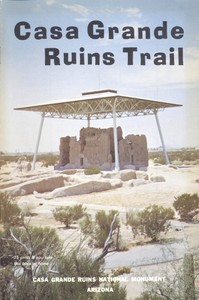
The catalog record for Casa Grande Ruins Trail — Context and Discussion provides practical reading context through 5,369 words, 24 min estimated reading time, and 1 detected text section.
The text analysis averages about 20.5 words per sentence, while the detected sections provide another way to judge how the source is divided.
Project Gutenberg metadata also associates the work with “Casa Grande National Monument (Ariz.),” connecting these edition facts with the source record’s subject description.
Explore this collection
These alternatives are selected using recorded categories and estimated reading time.
About 27 minutes
Ancient Civilizations
6,109 recorded words. 3 minutes difference from this book's estimate.
View Gutenberg source #38352About 21 minutes
Ancient Civilizations
4,737 recorded words. 3 minutes difference from this book's estimate.
View Gutenberg source #59241About 30 minutes
Ancient Civilizations
6,732 recorded words. 6 minutes difference from this book's estimate.
View Gutenberg source #62374Search stored excerpts and compare books → Choose by your preferences →
Choices use stored catalog measurements. Estimates vary with reading speed. A shared category is a catalog label, not a claim that two books have the same argument or literary quality.
Search reads excerpt text stored with this catalog and links to its associated Gutenberg record. The connection is stored in the site database; this tool does not recheck that every excerpt is word-for-word identical to that external record. Excerpt search does not cover every chapter and does not verify historical publication dates.
Catalog snapshot checked: 2026-09-26. Coverage: 97 public books, 97 available source excerpts.
Calculated from edition completeness, EPUB availability, text structure and catalogue metadata. Not a user rating.
Total of 100 points, scaled to a 2.5-5.0 range. Editions with an empty description or a missing EPUB file are not scored.
Public-domain source text
The source text is kept in the dedicated reader, separate from this catalogue record and its commentary.
The Casa Grande Ruins Trail booklet is a self-guided tour companion, not a narrative history. Its numbered stakes correspond to numbered paragraphs, directing attention to specific features like the village wall built of caliche, a limy subsoil found 2 to 5 feet below the surface. The text opens with safety warnings about cactus spines and heat, immediately framing the desert as both fragile and hazardous. This practical orientation contrasts with the archaeological content, which describes a stone-age civilization that developed extensive irrigation canals but was abandoned around A.D. 1450 for unknown reasons.
The booklet’s structure is keyed to physical markers: “Numbered stakes along the trail are set at points of interest, and corresponding numbered paragraphs in this booklet explain the features.” This format turns reading into a spatial activity. Visitors must move from stake to stake, matching text to terrain. The paragraphs are brief and factual, often beginning with a label—2. Village Wall—followed by measurements and materials. There is no narrative arc; each stop is self-contained. The effect is cumulative: the visitor assembles a picture of Hohokam life from discrete observations. The text does not speculate beyond what is visible, except to note that abandonment remains unexplained.
Three recurring details anchor the booklet’s archaeological account. First, the building material: caliche, a limy subsoil, used for walls that originally stood 7 to 11 feet high with no doorways—entry required ladders. Second, the irrigation system: Hohokam farmers “developed extensive irrigation canal systems that took water from the Gila River.” Third, the name Hohokam itself, meaning “those who have gone” in the Pima language, implying a direct ancestral link. These details are presented without interpretation of their social meaning. The wall’s lack of doorways suggests defense or control, but the text does not say so. The canals imply organized labor, but that too is left implicit. The booklet trusts the visitor to draw inferences from concrete facts.
The booklet’s safety notice—“You are in a desert area. Sometimes the desert can be harsh.”—is not a mere warning; it establishes the environment as an active presence. Cactus spines, heat, and poisonous animals are listed alongside archaeological features, reminding the visitor that the Hohokam lived in this same demanding landscape. The text also prohibits collecting even small pottery pieces, reinforcing that the ruins are both fragile and protected. This dual focus—on preservation and on the physical challenges of the desert—creates a tension between the ancient inhabitants’ adaptation and the modern visitor’s temporary exposure. The booklet thus functions as a guide not only to ruins but to a place that remains alive with risk and history.
The booklet is notably silent on several points. It does not explain why the Hohokam abandoned their villages around A.D. 1450, stating only “We do not know why.” It does not describe daily life, social structure, or religious practices. It does not compare the Hohokam to other ancient civilizations. The focus stays on observable remains: walls, canals, pottery. This restraint is a deliberate choice, leaving the visitor to wonder. The text’s brevity and factual tone resist romanticization. Instead, it offers a series of grounded observations that invite curiosity without satisfying it. The gaps in knowledge become part of the experience.
Readers using this booklet should pay attention to what is omitted as much as to what is stated. The numbered stakes guide the eye, but the text’s silences—about the Hohokam’s beliefs, their social organization, their reasons for leaving—are equally instructive. The booklet is best read on site, moving from stake to stake, letting the desert itself fill in the gaps. It is a document of archaeological humility, acknowledging that some questions remain unanswered.
Standing along that desert trail, I often thought how each numbered stake pins a story to the ground, much as old French archives once held a masked man’s identity fast. Both books speak of interpretation’s gentle weight—what we’re told, what we infer, what remains hushed. The True History of the State Prisoner, commonly called the Iron Mask Extracted from Documents in the French Archives — Reading Companion carries that same quiet patience, a shared whisper between ruin and cell.
Answer a few questions and save a private reflection on this device.