About 269 minutes
The First Four Books of Xenophon's Anabasis — Themes and Context
Ancient Civilizations
61,839 recorded words. 1 minutes difference from this book's estimate.
View Gutenberg source #22003
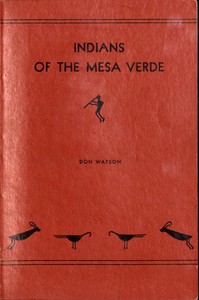
The catalog record for Indians of the Mesa Verde — Edition Insights provides practical reading context through 62,033 words, 4 hr 30 min estimated reading time, and 7 detected text sections.
The text analysis averages about 18.8 words per sentence, while the detected sections provide another way to judge how the source is divided.
Project Gutenberg metadata also associates the work with “Mesa Verde National Park (Colo.),” connecting these edition facts with the source record’s subject description.
Explore this collection
These alternatives are selected using recorded categories and estimated reading time.
About 269 minutes
Ancient Civilizations
61,839 recorded words. 1 minutes difference from this book's estimate.
View Gutenberg source #22003About 267 minutes
Ancient Civilizations
61,334 recorded words. 3 minutes difference from this book's estimate.
View Gutenberg source #52906About 263 minutes
Ancient Civilizations
60,317 recorded words. 7 minutes difference from this book's estimate.
View Gutenberg source #30707Search stored excerpts and compare books → Choose by your preferences →
Choices use stored catalog measurements. Estimates vary with reading speed. A shared category is a catalog label, not a claim that two books have the same argument or literary quality.
Search reads excerpt text stored with this catalog and links to its associated Gutenberg record. The connection is stored in the site database; this tool does not recheck that every excerpt is word-for-word identical to that external record. Excerpt search does not cover every chapter and does not verify historical publication dates.
Catalog snapshot checked: 2026-09-26. Coverage: 97 public books, 97 available source excerpts.
Calculated from edition completeness, EPUB availability, text structure and catalogue metadata. Not a user rating.
Total of 100 points, scaled to a 2.5-5.0 range. Editions with an empty description or a missing EPUB file are not scored.
Public-domain source text
The source text is kept in the dedicated reader, separate from this catalogue record and its commentary.
Don Watson opens Indians of the Mesa Verde with a vivid description of Cliff Palace as a "silent, empty city" that has stood for "almost seven centuries." The prose personifies the ruin as proud and haughty, setting a tone of reverence for the builders' intelligence and industry. Watson then shifts to a speculative account of abandonment driven by drought and crop failure, a narrative that frames the entire work. This opening establishes the book's dual approach: evocative scene-setting grounded in archaeological fact, followed by imaginative reconstruction of ancient life.
The book is organized into four seasonal chapters—Spring, Summer, Autumn, Winter—each detailing the activities of the Mesa Verde people. This structure allows Watson to present a cyclical view of subsistence and ceremony. In the Autumn excerpt, for instance, he describes the harvest of corn, beans, and squash, alongside the gathering of pinon nuts, yucca pods, and medicinal herbs. The text notes that pinon nuts are "cracked one at a time with the teeth" or ground into butter, illustrating the specificity of daily practices. Watson also emphasizes the unpredictability of wild crops, stating that pinon nuts "cannot be depended upon regularly." This seasonal framework helps readers understand how the cliff dwellers adapted to their environment throughout the year.
Watson devotes considerable attention to hunting, blending practical techniques with ritual requirements. In the Autumn chapter, he explains that deer and mountain sheep are stalked with bows and arrows, but for ceremonial skins, animals must be run down and choked to death so the hide remains unpierced. The text describes a method where the hunter imitates coyote or wolf cries to exhaust the deer. Organized hunts involve the entire town, with dates set by the Hunt Chief and announced by the Crier Chief. The night before, the hunt society holds ceremonies in a kiva; Watson notes that neglecting these rites would be "worse than if he were to forget to take his weapons." This integration of the spiritual and the practical is a recurring theme.
Throughout the excerpts, Watson grounds his narrative in specific artifacts and features. He mentions black-on-white pottery, decorated and corrugated jars, bone and stone tools, and the interior of a kiva with its roof. The illustrations list includes a Basket Maker mummy and cradle, as well as Pueblo cradle boards, indicating the range of material culture discussed. In the opening, Watson notes that Cliff Palace still shows "paintings bright on the walls" and "footprints of the people," though he acknowledges damage from owls, pack rats, and time. These details anchor the imaginative reconstruction in observable evidence, reminding readers that the book is based on archaeological work at Mesa Verde National Park.
Ceremonial practices permeate the activities Watson describes. During harvest, perfect ears of corn are set aside for seed, and "small ceremonies are performed over these precious ears" even months before planting. Hunting requires prayer sticks, prayers, and tiny stone animal images carried by each man. The text states that "unless these ceremonial preparations are made, a hunt cannot be successful." This emphasis on ritual underscores the worldview of the cliff dwellers, where spiritual preparation is as essential as physical tools. Watson presents these practices matter-of-factly, integrating them into the seasonal narrative without exoticizing them, which helps readers see ceremony as a routine part of life.
Watson's book is best approached as a blend of archaeological report and imaginative reconstruction. Readers should note that the seasonal chapters are not firsthand accounts but informed extrapolations based on the material remains of Mesa Verde. The author's voice is consistently respectful, and his details—from pinon nut gathering to deer-choking techniques—are drawn from evidence. Treat the narrative as a plausible picture of ancient life, not a documented history, and pay attention to the archaeological context provided in Part Two.
Reading Don Watson’s seasonal account of Mesa Verde made me think of sitting on my grandfather’s porch, watching dusk settle over the valley—how lives once felt so tied to the light. I felt that same quiet weight years ago in The Mayas, the Sources of Their History Dr. Le Plongeon in Yucatan, His Account of Discoveries — Background and Themes, where stones seemed to hold their own breath.
Your answers remain private and are stored only in this browser.