
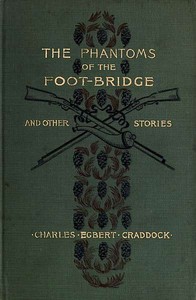
The Phantoms of the Foot-Bridge, and Other Stories by Charles Egbert Craddock
So, who was Charles Egbert Craddock? That was the pen name for Mary Noailles Murfree, a writer from Tennessee who became famous for her stories about the people and landscapes of the Southern Appalachians. This collection, published in 1895, is a prime example of her work. It pulls you right into a world of isolated coves, rugged trails, and communities where an old grudge can last generations.
The Story
The main attraction is the title story. It centers on a remote foot-bridge, a simple wooden crossing that becomes the focal point for local legend. After the Civil War, a terrible event occurred there—a betrayal and a killing. Now, the bridge is said to be haunted by the phantoms of those involved. The story follows outsiders and locals as they grapple with these tales. Is it a real haunting, or is it the collective guilt and trauma of the war making itself known? The other stories in the book are standalone but share the same DNA. You'll find tales of mountain justice, like in 'The 'Harnt' That Walks Chilhowee,' where a community is terrorized by a spectral figure, and stories of stubborn pride and family strife. They're all deeply connected to the land; the fog, the rivers, and the dense woods aren't just settings, they're active forces in the plot.
Why You Should Read It
Here's what got me: Craddock's ghosts feel real because they're so human. They're not monsters; they're echoes of pain. The supernatural elements are woven into the fabric of everyday life and history so seamlessly that you start to believe the mountains themselves hold memories. Her character portraits of the mountain people are respectful and detailed, avoiding simple caricature. She captures their dialect, their fierce independence, and their deep, often complicated, connection to their home. Reading this is less like reading a horror book and more like uncovering a piece of forgotten regional history, one where the line between story and superstition is beautifully blurred.
Final Verdict
This is a perfect pick for readers who love American regional writing or historical fiction with a eerie edge. If you enjoy the atmosphere of writers like Ambrose Bierce or the localized focus of Sarah Orne Jewett, but with a Southern Appalachian twist, you'll feel right at home. It's also great for anyone interested in post-Civil War America and how communities processed that trauma. Fair warning: the dialect can take a page or two to get used to, but it quickly adds to the authenticity. Overall, it's a fascinating, atmospheric slice of American storytelling that deserves more readers today.
This masterpiece is free from copyright limitations. Access is open to everyone around the world.
Mary Garcia
2 months agoI wanted to compare this perspective with traditional views, the logic behind each conclusion is easy to follow and verify. I’ll definitely be revisiting some of these chapters again soon.
Mary Miller
9 months agoSolid information without the usual fluff.
Linda Anderson
11 months agoGiven the current trends in this field, the emphasis on ethics and sustainability within the topic is commendable. It cleared up a lot of the confusion I had previously.
Matthew Jackson
1 year agoWhile browsing through various academic sources, the transition between theoretical knowledge and practical application is seamless. Definitely a five-star contribution to the field.





James Wilson
9 months agoAfter spending a few days with this digital edition, the cross-referencing of different chapters makes it a great study tool. The price-to-value ratio here is simply unbeatable.