
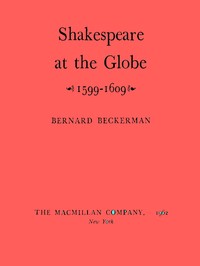
Shakespeare at the Globe, 1599-1609 by Bernard Beckerman
Most books about Shakespeare focus on the man, his poetry, or the political meanings in his plays. Shakespeare at the Globe does something different. Bernard Beckerman turns his attention to the physical space—the Globe Theatre—and asks a simple but powerful question: How did this specific building shape the plays written for it? The book covers the crucial decade from 1599 to 1609, when Shakespeare was at the peak of his powers and writing for this iconic stage.
The Story
There isn't a traditional plot, but there is a fascinating journey. Beckerman reconstructs the Globe not as a museum piece, but as a working machine for storytelling. He looks at the stage's design (that famous thrust stage jutting into the crowd), the lack of elaborate sets, and the reliance on daylight. He then connects these physical facts directly to Shakespeare's writing choices. Why are there so many vivid descriptive speeches? Because there was no backdrop to show a forest or a castle. How did actors manage intimate scenes with hundreds of people watching? The book explores the techniques and the raw, direct connection that this unique environment demanded.
Why You Should Read It
This book completely changed how I imagine these plays being performed. It turns the plays from beautiful texts into blueprints for an event. You start to see the stage directions hidden in the dialogue and understand the practical magic. Reading about the "two-hour traffic of our stage" makes sense when you learn about daylight constraints. The boisterous energy of Falstaff or the direct address of a soliloquy feels different when you picture the audience right there, close enough to touch. It makes Shakespeare feel less like a monument and more like a master showman solving problems in real time.
Final Verdict
This is a perfect read for anyone who loves Shakespeare but feels a bit distant from the plays as they were originally performed. It's for theater fans curious about stagecraft, and for history lovers who enjoy a tangible, grounded look at the past. You don't need a PhD to enjoy it—just a bit of curiosity about what happened before the curtain went up (though, of course, there was no curtain either). It's a backstage pass to the greatest show in Renaissance London.
This text is dedicated to the public domain. You do not need permission to reproduce this work.
Barbara Williams
8 months agoAfter spending a few days with this digital edition, the way it challenges the status quo is both daring and well-supported. I'll be citing this in my upcoming project.
Charles Ramirez
1 year agoA must-have for anyone studying this subject.
Jackson Moore
2 months agoA bit long but worth it.
Matthew Smith
8 months agoGreat digital experience compared to other versions.


Nancy Johnson
3 months agoA brilliant read that I finished in one sitting.