
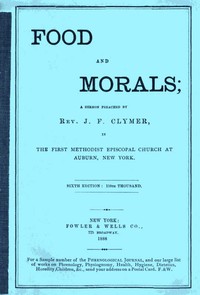
Food and Morals by J. F. Clymer
Okay, let's set the scene. It's 1888. The telephone is a newfangled gadget, and a doctor named J.F. Clymer is on a mission. He's not just worried about your digestion; he's worried about your eternal soul. 'Food and Morals' is his argument that the two are inseparable.
The Story
There isn't a traditional plot with characters. Instead, Clymer lays out his case like a lawyer in a courtroom of public opinion. He draws direct lines from a diet of refined flour, meat, and spices to societal ills like crime, poverty, and 'nervous disorders.' He champions the 'Graham system'—think whole wheat bread, fruits, vegetables, and simplicity—as the path to physical health, mental clarity, and moral purity. The book is a journey through his logic, citing everything from biblical passages to contemporary observations, trying to convince the reader that reforming the nation's dinner plates is the first step to saving its character.
Why You Should Read It
This book is a trip. Reading it today is like stepping into a time machine. Clymer's absolute certainty is captivating. He genuinely believed that choosing brown bread over white was a righteous act. While some of his science is, well, from 1888, the core idea—that our food choices are deeply connected to our ethics and worldview—feels incredibly modern. We see echoes of it in today's debates about organic farming, fair trade, and veganism. It's humbling and hilarious to see how these conversations have evolved (or haven't). You'll find yourself nodding at one point ('maybe we do eat too much processed food') and gasping the next ('spices lead to moral decay?!').
Final Verdict
This is a niche gem, but a brilliant one. It's perfect for history buffs who love social history, for foodies curious about the philosophy behind eating, or for anyone who enjoys seeing how passionate people can get about seemingly ordinary things. Don't read it for dietary advice; read it to understand a fascinating slice of American thought. It's a short, fiery, and utterly unique look at a time when changing the world started with what was on your breakfast table.
This book is widely considered to be in the public domain. It is now common property for all to enjoy.
Sarah Thomas
1 year agoAfter finishing this book, it manages to explain difficult concepts in plain English. Don't hesitate to start reading.
Dorothy Johnson
2 years agoEnjoyed every page.
Kevin Sanchez
1 year agoAfter hearing about this author multiple times, it manages to explain difficult concepts in plain English. One of the best books I've read this year.
Emily Scott
2 months agoGood quality content.





Emma Lewis
9 months agoJust what I was looking for.